
Adjustable prosthetic sockets are built to respond to these changes. They let you make controlled, small adjustments to fit or internal volume, rather than living with a socket that only works for one version of your limb. But adjustability is a feature, not a fix-all. It's one part of a larger prosthetic system, and the right design, fit, and adjustment limits still need to come from a qualified prosthetist.
This guide covers how adjustable sockets work, what the current evidence actually shows, how materials and manufacturing affect performance, who tends to benefit, and what to know about safe use, maintenance, and cost in the US.
Key Takeaways
- Adjustable sockets accommodate residual-limb volume changes more flexibly than fixed-geometry designs
- Comfort and mobility gains depend on anatomy, socket design, alignment, and a proper professional fit
- Adjustment mechanisms range from straps and dials to air bladders and modular panels
- Pricing, Medicare coverage, and replacement timing require confirmation from your prosthetist and insurer
What Is an Adjustable Prosthetic Socket and How Does It Work?
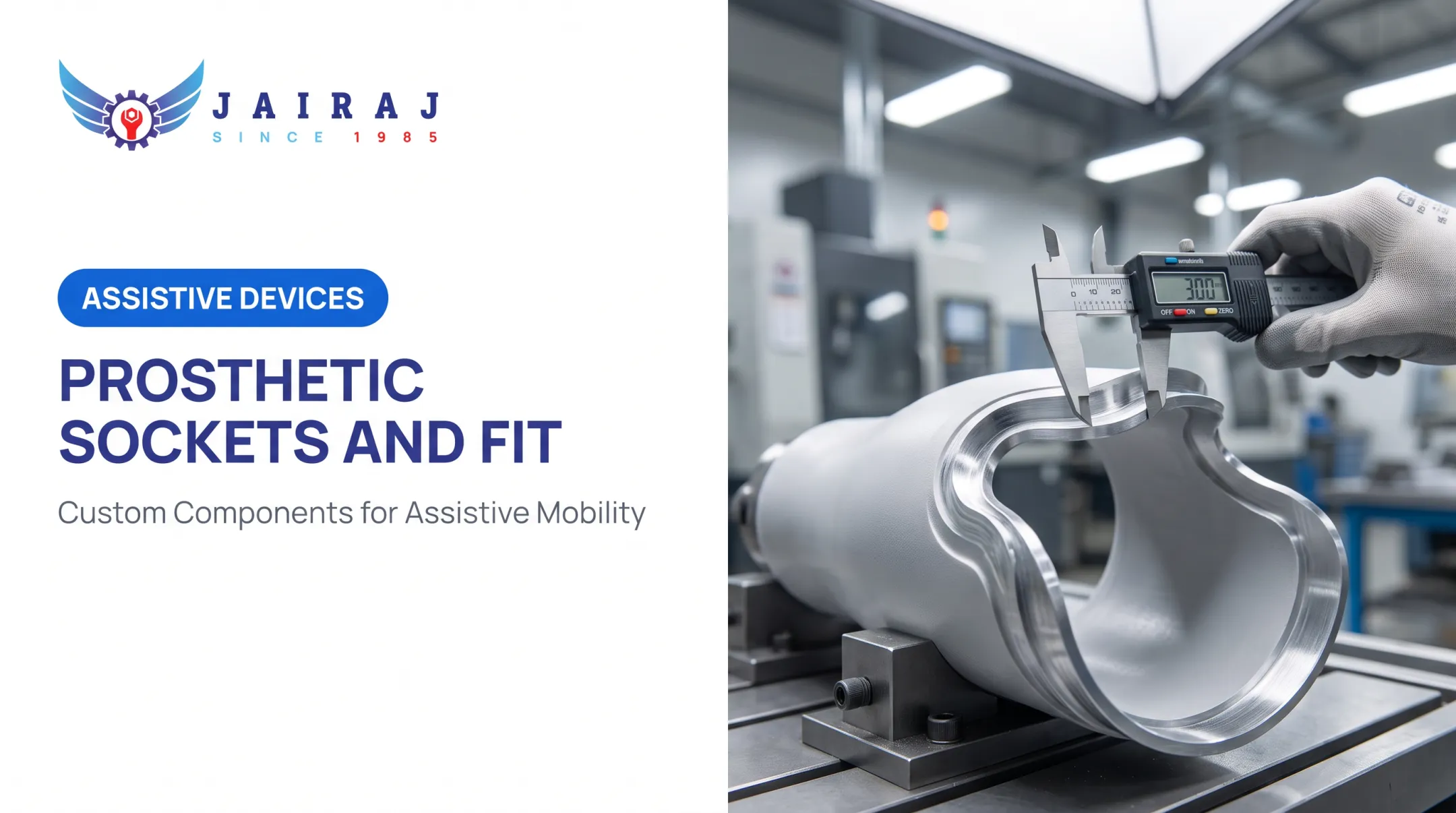
The socket is the part of a prosthesis that touches your residual limb directly. It determines how weight gets distributed, how well the prosthesis stays suspended, how much control you have over movement, and whether your skin stays healthy under repeated loading.
A conventional fixed-geometry socket is shaped once during fabrication and doesn't change afterward. An adjustable-volume socket includes built-in features that let you or your prosthetist modify internal space without replacing the entire device.
Common Adjustment Mechanisms
| Mechanism | How it works |
|---|---|
| Straps, buckles, hook-and-loop | Tighten or loosen circumference around specific zones |
| Dials and cable/lacing systems | A reel tensions cables routed through adjustable panels |
| Moveable panels or struts | Panels shift radially to relieve or add pressure in specific spots |
| Air or liquid bladders | Adding or removing fluid changes the space inside the socket |
| Modular sections | Interchangeable panels attach to an adjustable base frame |
These mechanisms matter because residual-limb volume shifts often. Common drivers include time of day, exercise, swelling, weight fluctuation, muscle atrophy, heat, and conditions such as diabetes or vascular disease.
Fine-Tuning vs. Clinical Modification
Only make adjustments your prosthetist has specifically taught and approved. Persistent pain, skin changes, instability, or a socket that won't stay suspended no matter how much you tighten it means you should call your prosthetist rather than keep adjusting on your own.
Adjustable sockets also need to work with the rest of your system: liners, suspension sleeves, vacuum components, knees, and feet. Compatibility isn't automatic; it has to be confirmed for your specific combination of parts.
What Are the Benefits and Evidence Behind Adjustable Sockets?
The theoretical appeal of adjustable sockets is straightforward:
- More consistent contact with the limb
- Fewer sock-ply changes throughout the day
- Better suspension as volume shifts
- Reduced friction or pressure concentration during activity
For many users, that means more confidence walking, sitting, and moving between activities without stopping to fix their fit.
What the Research Actually Shows
A large retrospective study published in PM&R in 2026 followed 444 adults (179 above-knee, 265 below-knee) who transitioned from fixed-geometry to adjustable-volume sockets across multiple US clinics. Over follow-up periods ranging from 8 days to one year, researchers found:
- Socket Comfort Score improved from 5.59 to 7.16 (statistically significant)
- Mobility scores (PLUS-M) rose from 44.8 to 46.9
- Quality of life and walking-ability satisfaction both improved significantly
Those gains are encouraging, but the study has clear limits. It was retrospective, with no comparison group, and it didn't control for liner or suspension differences between patients. Association is not the same as guaranteed individual outcomes.
A smaller, more tightly controlled trial adds nuance. Research published via PubMed tested three adjustable transfemoral socket designs in 29 participants over four-week home trials. While successful users reported benefits, abandonment due to discomfort or instability ranged from 24% to 41% depending on the specific design. In other words, results vary a lot by device, not just by the general category of "adjustable."

Adjustable vs. Fixed: A Decision Aid, Not a Verdict
| Factor | Fixed-Geometry Socket | Adjustable Socket |
|---|---|---|
| Fit flexibility | Set at fabrication | Can respond to volume shifts |
| Sock-ply changes | Often needed daily | Potentially reduced |
| Component complexity | Lower | Higher (hardware to maintain) |
| Clinical oversight needed | At fitting | At fitting and ongoing use |
Neither option is universally superior. The right call depends on your anatomy, activity level, and how much volume fluctuation you actually experience.
How Do Materials, Design, and Manufacturing Affect Socket Performance?
Socket performance comes down to what it's made from and how precisely it's built. Rigid thermoplastics and carbon-fiber composites provide structural strength and load transfer. Flexible polymers and fabric interfaces improve comfort and breathability. Liners and pads manage skin contact and cushioning.
Each material choice involves trade-offs:
- Rigid frames maintain alignment and suspension but add weight
- Flexible panels improve comfort but can compromise structural support if overused
- Textile interfaces help with heat management and cleanability but wear faster than composites
From Assessment to Final Fit
Building a socket, adjustable or otherwise, typically follows these stages:
- Clinical assessment of limb shape, skin condition, and activity goals
- Measurement or digital scanning to capture precise geometry
- Modeling and rectification to manage pressure zones
- Fabrication, incorporating the chosen adjustment mechanism
- Diagnostic fitting and alignment checks before final delivery
- Follow-up modification as needed during the adjustment period
Dimensional accuracy and consistent tolerances are critical here. A socket undergoes repeated loading and adjustment cycles every single day, so manufacturing precision directly affects how long it lasts and how reliably it performs.

A Note for Medical-Device Manufacturers
If you're developing adjustable socket components, address these technical questions before production:
- Intended amputation levels
- Expected load and fatigue life
- Skin-contact material biocompatibility
- Cleaning requirements and environmental exposure
- Compatibility with existing prosthetic systems
Jairaj Group is a B2B manufacturer with over four decades in polymer engineering. It brings precision injection molding, in-house tool-room capabilities, PLC-controlled machinery, and ISO 9001:2015 quality systems to custom plastic component development.
The company already produces precision plastic components for medical-device applications that require tight tolerance control.
That said, any manufacturer considering a partnership should independently verify socket-specific regulatory requirements, biocompatibility needs, and product certifications before moving forward on a component-development project.
Who May Benefit and How Should a Socket Be Selected?
Certain patterns tend to prompt a conversation about adjustable sockets:
- Repeated volume fluctuation throughout the day
- Frequent need to add or remove socks for fit
- Inconsistent suspension or a prosthesis that feels loose during activity
- Recurring pressure sores or discomfort in specific zones
- Difficulty maintaining fit as activity levels change
Factors That Influence Selection
Your prosthetist will weigh several factors:
- Limb level (below-knee or above-knee)
- Residual-limb shape and tissue condition
- Skin integrity and suspension preference
- Activity goals
- Dexterity to operate dials, straps, or other adjustment hardware
Before your appointment, it helps to:
- Track when discomfort happens during the day
- Note volume-related fit changes you've noticed
- Watch for skin warning signs like redness or irritation
- Bring your current liners and socks to the visit
- Ask directly about adjustment limits and the follow-up plan
Adjustment, Maintenance, Safety, Cost, and Coverage
Daily safe use starts with a simple habit: inspect your skin and socket before and after wearing. Make only the small, clinician-approved adjustments you've been trained to do, and check suspension before you start walking.
Stop and contact your prosthetist if you notice:
- Pain or persistent redness
- Open wounds or numbness
- Leakage or unusual hardware movement
Maintenance basics apply across most adjustable systems:
- Follow the manufacturer's specific cleaning instructions
- Keep liners and skin clean and dry
- Inspect straps, dials, cables, and seams regularly for wear
- Schedule professional reviews whenever fit or hardware feels different
Understanding the Cost Picture
Total cost typically includes the socket itself, liners, suspension components, fabrication, fitting, alignment, and ongoing follow-up or repairs. Pricing varies widely depending on design complexity and components involved, so ask your provider for an itemized estimate rather than relying on general figures.
For Medicare beneficiaries, Medicare's coverage page confirms that Part B may cover medically necessary prosthetic devices ordered by a physician. Actual coverage still depends on documentation, correct coding, your supplier's Medicare participation, and your plan's terms.
After your deductible, standard cost-sharing typically applies. Confirm current rules with your prosthetist and Medicare directly before assuming coverage.

Frequently Asked Questions
Can you adjust a prosthetic socket?
Some adjustable sockets allow user-controlled fine-tuning through dials, straps, or similar mechanisms. However, adjustment limits and proper technique must be taught by your prosthetist, and persistent discomfort or skin problems always require professional evaluation.
How much does a below-knee prosthetic cost?
Cost varies significantly based on socket design, foot and knee components, liners, suspension system, and insurance coverage. Request an itemized estimate from a qualified prosthetist or supplier for an accurate figure.
Does Medicare pay for prosthetic devices?
Medicare may cover medically necessary prosthetic devices under Part B when ordered by a physician, but eligibility depends on documentation, coding, and supplier enrollment. Confirm specifics through current Medicare guidance and your treating provider.
How does a below-the-knee prosthetic stay on?
Common suspension methods include locking-pin liners, suction, vacuum-assisted suspension, sleeves, and seal-in liners. The best method for you depends on your limb anatomy, skin condition, activity level, and clinical assessment.
Are adjustable prosthetic sockets suitable for everyone?
Suitability depends on residual-limb condition, volume fluctuation patterns, activity level, dexterity, and component compatibility. Adjustable designs aren't automatically the right choice for every user. Your prosthetist can help determine fit.
How often should an adjustable prosthetic socket be checked or replaced?
Review timing depends on body or limb-volume changes, wear, damage, and comfort rather than a fixed schedule. Seek an assessment whenever fit changes or new symptoms appear, rather than waiting for a set interval.