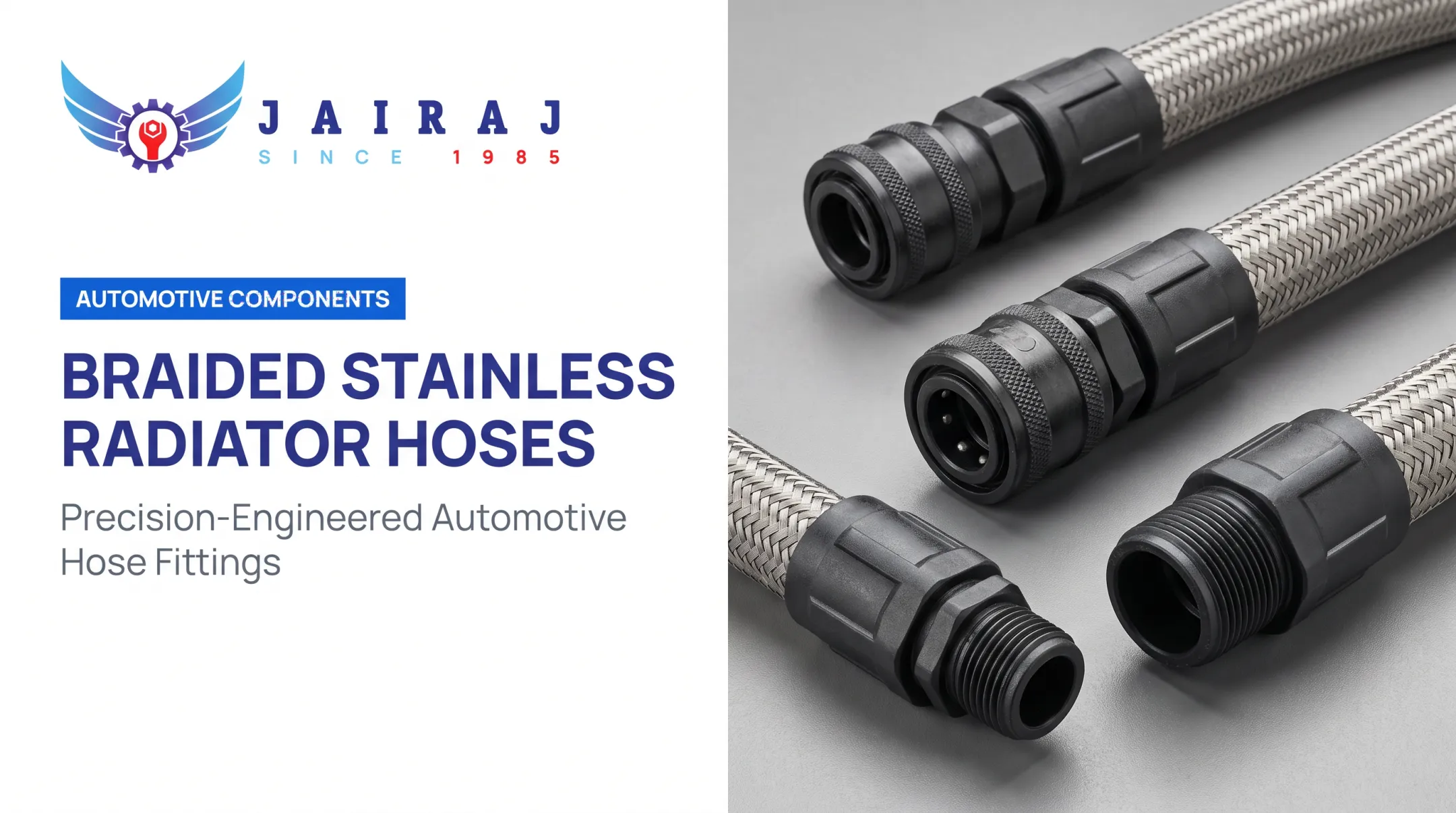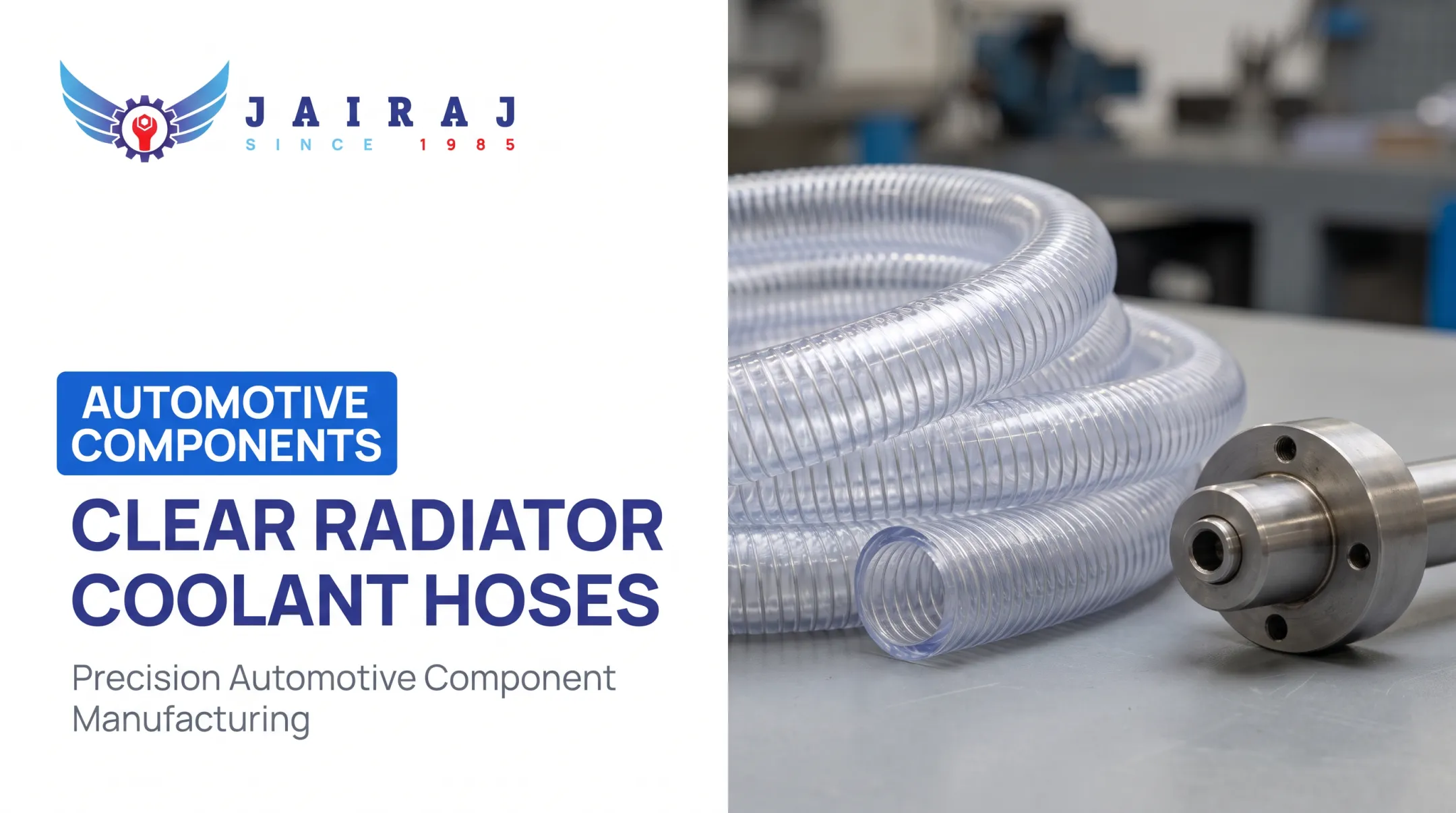

That's why picking between silicone and rubber isn't a styling decision. It's a reliability decision. Silicone generally offers a wider temperature and environmental window, while application-specific rubber compounds often win on fluid compatibility, abrasion resistance, upfront cost, and proven OEM fitment. Neither wins across the board.
This guide walks through performance, chemical compatibility, standards, maintenance, and lifecycle cost, then helps you figure out which material actually matches your operating conditions.
Key Takeaways
- Silicone solves specific temperature, cold-flex, or environmental problems; it isn't automatically "better."
- Identify the rubber compound first: EPDM, nitrile, and neoprene behave differently.
- Match the hose to coolant, pressure, vibration, and oil exposure, not appearance.
- Check OEM specs, SAE standards, and supplier data sheets before approving any replacement.
Silicone vs Rubber Radiator Hoses: Quick Comparison
Cost
Silicone hoses typically carry a higher purchase price, and some silicone constructions call for compatible clamps rather than standard worm-gear clamps. Gates, for example, specifies thermoplastic or silicone-compatible clamps for its silicone coolant hose line, which adds to the installed cost beyond the hose itself.
Modern EPDM compounds have narrowed that cost gap in some cases. In Gates' 2013 release announcing a peroxide-cured EPDM coolant hose, Gates positioned the product as a "less expensive alternative" to silicone or sulfur-cured hose for heavy-duty fleets.
Lifecycle cost isn't just the sticker price. Factor in:
- Inspection frequency required by the application
- Replacement labor and downtime
- Consequences of an unplanned failure (overheating, warranty claims, roadside calls)
- Clamp and connection hardware compatibility
A cheaper hose that fails twice as often isn't actually cheaper.
Temperature and Cold Flexibility
This is where material grade matters more than the generic label. Published ranges vary significantly by product and construction:
| Product | Material | Published Range |
|---|---|---|
| Gates Straight Silicone Coolant Hose | Silicone | -70°F to +350°F |
| Samco DS003 | Polyester-reinforced silicone | -58°F to +356°F |
| Gates Molded Coolant Hose | EPDM | -40°F to +275°F |
| Dayco Flex Radiator Hose | EPDM | -40°F to +257°F |
According to Gates' product data, its standard silicone construction outperforms its molded EPDM on upper-temperature limits. That extra margin matters near turbochargers, tight exhaust routing, or extreme cold climates. For a passenger vehicle running within its designed thermal range, standard rubber is often plenty.

Fluid and Chemical Compatibility
A hose rated well for coolant isn't automatically fine around oil or fuel. Samco's chemical resistance chart rates silicone's antifreeze/glycol compatibility at 20°C as "Good," but flags motor oil at 150°C as only "Fair" and aromatic fuels as "Poor."
Standard EPDM resists coolant chemistries well but swells and softens when exposed directly to oil or fuel, the same vulnerability silicone shares in incidental exposure.
Before approving a swap:
- Confirm the coolant formulation (OAT, HOAT, conventional glycol) against the hose maker's chart
- Check for incidental oil-mist or fuel-vapor exposure in the routing path
- Don't assume "coolant-approved" extends to any fluid the hose might touch
Durability and Environmental Exposure
Ozone, UV, abrasion, and heat cycling all degrade hose material differently depending on compound and construction. Gates notes that its ECR (electrochemically resistant) EPDM avoids silicone's higher susceptibility to puncture and tearing.
Its silicone sheet products are separately rated for UV and ozone resistance. Neither material is universally tougher.
What matters just as much as the base polymer:
- Reinforcement layers (polyester fabric, meta-aramid, steel wire)
- Wall thickness and bend radius
- Installation quality and chafe protection
SAE J20 governs coolant-system hose construction and class, and SAE J1684 standardizes electrochemical-degradation testing. If a hose doesn't carry the right J20 class marking, don't assume equivalence just because it looks similar.
Maintenance and Installation
Clamp selection isn't an afterthought. Silicone's softer cover can extrude through an unsuitable clamp, which is why manufacturers specify thermoplastic or silicone-rated clamps.
Modern EPDM often pairs with constant-tension or spring clamps that compensate as the rubber contracts with age. Some thermoplastic clamp designs are built as dynamic seals that don't need retightening.
Vacuum-collapse resistance is also construction-specific: some EPDM hoses use internal molded ribbing, others rely on a wire helix, and some silicone products bury a wire spring for negative-pressure service. The product spec and vehicle design, not the material name alone, should dictate clamp type and reinforcement.
What Is Silicone Radiator Hose?
Silicone radiator hose is a reinforced composite, not a plain rubber tube. Typical construction pairs a silicone tube and cover with fabric or aramid reinforcement plies, giving it pressure capability, flexibility, and burst resistance rather than the base polymer alone.
Core strengths:
- Broad continuous and intermittent temperature capability
- Strong resistance to ozone and UV degradation
- Retains flexibility in cold conditions better than many rubber grades
- Suited to selected high-heat or performance builds
Key limitations:
- Higher water permeation than comparable EPDM coolant hose
- Lower resistance to oil and fuel exposure than purpose-built rubber compounds
- Some sensitivity to tearing or puncture under abrasion
- Clamp compatibility requirements add installation complexity
- Typically higher purchase cost
Silicone shouldn't be chosen because it feels softer or comes in more colors. The right question is whether the specific grade is approved for your coolant chemistry, pressure, and vacuum service, and whether it meets the applicable SAE J20 class.
Where Silicone Earns Its Keep
Silicone tends to make sense in:
- High-performance or turbocharged engines with elevated under-hood heat
- Motorsport and specialty equipment with extreme duty cycles
- Severe cold-climate operation requiring consistent flexibility
- Outdoor or UV-heavy environments
Gates designed a heavy-duty silicone coolant hose specifically for low-airflow, high-heat transit bus configurations, built with meta-aramid reinforcement to withstand ambient heat spikes up to 500°F. That is a documented engineering decision for a defined thermal challenge. It does not mean every application needs silicone. For a standard delivery van or farm tractor, the same hardware would be over-specified and underexploited.
Custom geometry matters here too. Complex engine bays often need precise bend angles and end-form accuracy more than they need a specific polymer, since a perfectly fitted rubber hose will outperform a poorly routed silicone one every time.
What Is Rubber Radiator Hose?
"Rubber" covers a family of compounds, not a single material. EPDM is the default for most coolant applications, but nitrile (NBR) and neoprene (CR) formulations show up where oil resistance or abrasion protection matters more than thermal range.
Why rubber stays standard in OEM and fleet work:
- Established fitment and broad aftermarket availability
- Compound options tailored to oil, fuel, or abrasion exposure
- Lower acquisition cost
- Compatible with standard clamps and routine service procedures
Rubber degrades through specific, identifiable mechanisms:
- Heat aging - causes hardening and cracking over time
- Ozone exposure - leads to surface checking without the right compound
- Electrochemical degradation (ECD) - coolant and fittings form a galvanic cell that admits coolant into microcracks, a failure mode SAE J1684 was built to test for
- Incompatible fluids - oil or fuel contact causes swelling and softening
- Poor routing - repeated kinking accelerates fatigue
A visually similar replacement hose that skips the correct SAE J20 class or electrochemical-resistance marking may not hold up the same way, even if it looks identical on the shelf.
Where Rubber Still Wins
Rubber remains the practical default for:
- Standard passenger vehicles operating within designed temperature ranges
- Fleet and heavy-duty equipment with high-volume replacement needs
- Moderate-temperature cooling systems
- Installations exposed to abrasion or incidental oil contamination
Factory-molded rubber hoses also support accurate bend geometry and routing right out of the box, which matters when a hose has to clear sensors, brackets, and other underhood components without rework.
On the cost side, a Gates heavy-duty technical comparison found that in a defined Class 8 truck duty cycle running at 99°C (210°F) on a two-shift schedule, silicone hoses lost nearly 5.3 gallons of water per year, compared with roughly 1 quart for electrochemically resistant EPDM on the same truck, according to Gates' heavy-duty bulletin.

That's a defined-duty result, not a universal rule, but it shows why rubber isn't automatically the lower-lifecycle-cost choice either. Run the comparison against your actual duty cycle before assuming either material saves money.
Silicone vs Rubber: What Is Better?
Neither material wins by default. The hose whose tested properties match your fluid, thermal environment, pressure, routing, and service strategy wins.
Choose silicone when:
- Documented temperature exposure exceeds standard rubber's range
- Cold-climate flexibility is a real operating concern
- Ozone/UV resistance or specialized packaging justifies the premium
- The specific grade is approved for your coolant and pressure/vacuum service
Choose application-specific rubber when:
- OEM fitment and factory routing are priorities
- Oil contamination or abrasion is likely in the installation environment
- Permeation control and standard serviceability matter
- Cost-sensitive fleet replacement is the deciding factor
Run through this checklist before approving any replacement:
- Coolant chemistry (OAT, HOAT, conventional)
- Continuous and peak temperature exposure
- Pressure and vacuum requirements
- Minimum bend radius and routing constraints
- Vibration and chafing exposure
- Approved clamp type
- SAE J20 class and reinforcement markings
- Inspection access and replacement consequences
Total cost of ownership should be built from real duty-cycle data, not assumed lifespan multiples. Neither material has published evidence supporting a universal "lasts X times longer" claim.
For OEMs developing a cooling component outside standard catalog dimensions, custom tooling and validated manufacturing matter as much as the material choice itself.
Jairaj Group has produced precision plastic and polymer components since 1985. The company operates ISO 9001:2015-certified facilities with in-house tool rooms and supports automotive OEMs through dimensional verification and material-properties testing on custom polymer parts.
Any radiator-hose-specific program should still be scoped against the application's exact pressure, thermal, and coolant requirements before production begins.
Real-World Examples
Silicone for a defined thermal challenge. Gates engineered a heavy-duty silicone coolant hose for transit-style buses with low-airflow, high-heat engine bays. Meta-aramid reinforcement handles ambient heat spikes up to 500°F (260°C). This was a manufacturer response to a documented packaging and heat problem, not proof that silicone suits every bus or truck platform.
EPDM retained for cost and permeation control. Gates' 2013 FleetRunner Hi-Temp launch introduced peroxide-cured EPDM as a lower-cost alternative to silicone for trucks, buses, and off-road equipment. The product cited:
- Lower water permeation
- Better abrasion resistance
- Fewer cold-water leaks at connection points
Fleet publications at the time corroborated its cost positioning against silicone.
What this means: Both examples reflect manufacturer engineering decisions tied to specific operating conditions. Neither result transfers automatically to a different vehicle, coolant chemistry, or duty cycle. Use your equipment manufacturer's specification as the final word, not a case study from a different application.

If your team is developing a custom cooling or sealing component and needs tooling, prototyping, or testing support, Jairaj Group's engineering team works with automotive and industrial OEMs on polymer part development from material selection through production validation.
Conclusion
Silicone is a targeted solution for documented high-temperature, environmental, or packaging demands. For many standard and fleet cooling systems, the correct rubber formulation, properly specified, does the job for less money and with simpler maintenance.
Material choice is only one part of system reliability. These factors carry equal weight:
- Construction quality and standards compliance
- Correct fitment and clamp selection
- Routing and inspection habits
Before you swap a hose, compare verified technical data against your equipment manufacturer's requirements. Don't choose based on color, price alone, or the assumption that one material automatically outlasts the other.
Frequently Asked Questions
Is silicone hose better than rubber hose?
Silicone performs better under extreme temperature, UV, and ozone exposure. Rubber often wins on fluid compatibility, abrasion resistance, cost, and OEM fitment. The better choice depends entirely on your operating conditions.
What is the best material for coolant hoses?
It depends on coolant chemistry, temperature range, pressure, routing, and contamination risk. EPDM suits most standard coolant systems; oil-resistant rubber or silicone suit specific thermal or chemical challenges, per the equipment manufacturer's spec.
What is the average lifespan of silicone radiator hoses?
Lifespan varies by formulation, coolant type, installation quality, and operating temperature, so there's no universal figure. Check manufacturer data sheets and field results for your specific hose grade and duty cycle.
Can silicone hoses be used for radiator hoses?
Yes, purpose-built silicone radiator hoses work well when their pressure, temperature, and coolant-compatibility specs match the cooling system. Confirm permeation rates, reinforcement, and clamp requirements before installation.
Do silicone radiator hoses need special clamps?
Often, yes. Many silicone hose makers specify thermoplastic or silicone-compatible clamps to prevent the softer cover from extruding. Check the product spec, use correct torque, and inspect after installation.
Are silicone radiator hoses worth the extra cost?
Only if your application actually needs silicone's temperature range, cold flexibility, or environmental resistance. Compare total cost, including clamps and maintenance, against a properly specified rubber alternative before deciding.